
Teşkilat Episode 154 Review: Secrets, Betrayal, and the Edge of Loyalty

Introduction: Secrets, Betrayal, and the Edge of Loyalty
Few television dramas manage to balance national duty with human fragility the way Teşkilat does. In its 154th episode, the long-running Turkish espionage series returns with a bold statement — trust is the most dangerous weapon of all.
With Rutkay exposing Nazlı’s true identity, the story plunges into chaos, revealing how betrayal ripples through every corner of the intelligence network. What unfolds is not just an episode, but a tense, psychological chess match that tests loyalty, endurance, and emotional survival.
The Betrayal That Breaks the Silence
From the first scene, the tone is set. Rutkay, a man driven by revenge and power, uncovers Nazlı’s secret allegiance, turning her into both a victim and a symbol.
His revelation is less about tactical advantage and more about psychological warfare. Rutkay knows that in intelligence work, breaking trust is far deadlier than pulling a trigger.
By exposing Nazlı, he strikes directly at the emotional foundation of the Teşkilat team — especially Altay and Uzay, who must now choose between compassion and command.
Altay and Uzay: Loyalty Under Fire
Nazlı’s near-death scene is one of the most poignant in the episode.
As the team scrambles to save her life, Altay steps in not just as a soldier, but as a moral anchor. His dynamic with Uzay becomes the emotional center — two men battling their inner storms while the world burns around them.
Altay’s quiet insistence on keeping Nazlı alive, despite her betrayal, illustrates the human cost of espionage. It’s a performance layered with restraint, showing that even heroes can bleed from within.
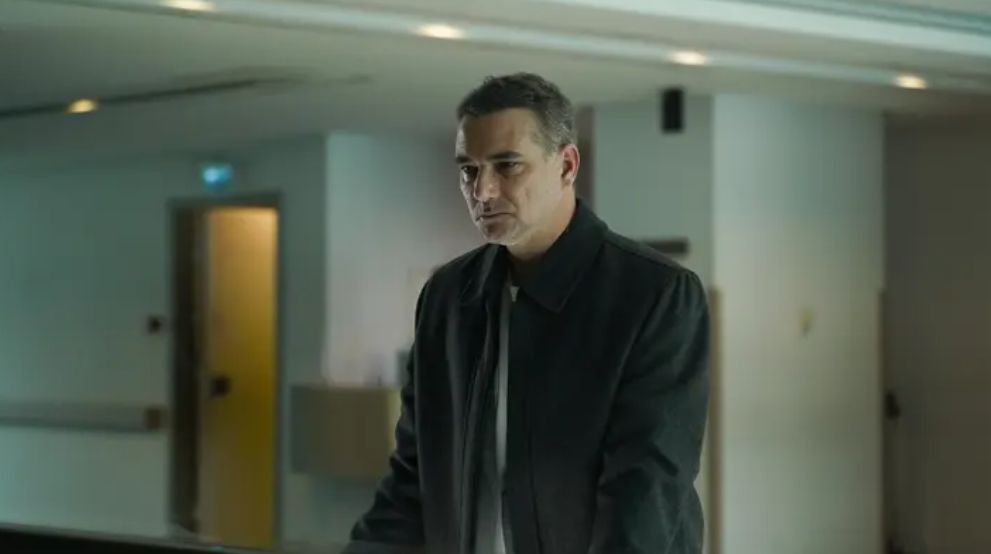
In this moment, the series achieves something rare: it turns a spy thriller into a study of moral endurance.
Dizdar’s Interrogation: The Anatomy of Control
While Altay fights an emotional battle, Dizdar wages a psychological one.
Having captured Korkut, Hamdi, and Ejder, Dizdar’s scenes bring a different rhythm — slower, colder, and clinically intense.
Under Rutkay’s command, he seeks not just answers but dominance. The lighting, the close-up camera work, and the stillness in these sequences recall the stylistic approach of Tinker Tailor Soldier Spy — where silence speaks louder than screams.
Korkut’s resilience during interrogation underscores a key theme: loyalty is not measured by obedience, but by endurance.
As Bahar searches frantically for Korkut, the episode draws a powerful parallel between personal love and professional duty — both painful, both costly.
The Return of the Enemy: Reinvention and Revenge
Every time the Teşkilat team believes they’ve contained their adversaries, the threat resurfaces — sharper and smarter.
The new enemy strategy in Episode 154 feels eerily modern, built on cyber deception, infiltration, and strategic misdirection rather than brute force.
This reflects the evolution of contemporary warfare: invisible, psychological, and global. The writers cleverly mirror real-world dynamics, echoing cyber-espionage and political disinformation strategies used in today’s intelligence ecosystems.
At the center stands Cevher, the strategic mind and the emotional backbone of the organization. His scenes offer a masterclass in leadership — calm, controlled, yet visibly burdened.
Altay: The Heart That Refuses to Break
If the show has a soul, it’s Altay.
His resilience defines Teşkilat’s enduring spirit — a soldier who refuses to yield, even when surrounded by betrayal and doubt.
In one of the episode’s standout sequences, he declares, “They can break our bodies, not our faith.”
It’s a line that transcends fiction, capturing the psychological backbone of every intelligence officer who fights unseen wars.
The writing here shines, blending poetic realism with patriotism, making Altay not just a character but an archetype of unbreakable resolve.
Technical Craft: Cinematic Precision and Emotional Editing
Episode 154 is not only narratively rich but technically sophisticated.
The cinematography alternates between cold metallic tones in interrogation scenes and warm desaturated palettes in emotional arcs, symbolizing the duality of intelligence work — heart versus mission.
The score is subtle yet haunting, relying on minimalist percussion and strings to create a sense of constant unease. The editing maintains a pulse that feels organic, allowing emotional scenes to breathe before plunging back into suspense.
The director’s visual language is intentional — every shot layered with subtext. The use of slow zooms during Nazlı’s hospital scenes evokes both intimacy and isolation, reflecting her internal guilt.
Themes: Identity, Sacrifice, and the Cost of Silence
The strength of Teşkilat lies not only in its action sequences but in its philosophical undertones.
Episode 154 asks difficult questions:
- What is identity in a world built on secrecy?
- How much truth can a patriot afford to tell?
- Is loyalty still pure when the system itself becomes corrupt?
- Every character becomes a metaphor for modern espionage ethics. Nazlı represents guilt, Korkut embodies endurance, and Altay personifies faith in purpose.
It’s no coincidence that this episode arrived in a global climate where surveillance and truth are constantly under scrutiny.
Teşkilat reflects that — not as propaganda, but as a mirror to collective paranoia.
Performance Review: Emotion Meets Discipline

From a critical standpoint, Episode 154 delivers some of the series’ most disciplined performances.
- Tolga Sarıtaş (Altay): carries the emotional gravity of leadership with subtlety. His facial control during emotional turmoil is world-class acting.
- Melisa Akman (Nazlı): delivers raw vulnerability, showing regret without losing strength.
- Erkan Bektaş (Cevher): anchors every chaotic moment with dignified restraint.
- Serhat Tulumluer (Rutkay): finally emerges as a fully realized antagonist — ruthless, intelligent, and disturbingly calm.
Each performance contributes to Teşkilat’s identity as a character-driven spy epic rather than a simple action drama.
Critical Evaluation: Strengths and Minor Shortcomings
Strengths:
- Deep psychological realism
- Balanced pacing between emotion and action
- Strong ensemble performances
- Cinematic direction and sound design
- Mature political subtext
Weaknesses:
- Some interrogation scenes felt slightly underexplored
- Bahar’s subplot could have benefited from more emotional build-up
- Yet, these are small imperfections in an otherwise polished and compelling episode.
Cultural Significance and Global Appeal
Teşkilat continues to dominate both local and international attention for good reason.
It stands as a reflection of modern Turkish storytelling, blending nationalism with humanity — a combination that resonates globally.
The series doesn’t just entertain; it informs and provokes thought, especially about the moral dimensions of secrecy and sacrifice.
Its influence can be seen in how global audiences now approach Turkish productions — with expectations of both cinematic quality and cultural authenticity.
Final Verdict: A Brilliant Fusion of Intellect and Emotion
Episode 154 of Teşkilat is a triumph of emotional precision and political storytelling.
It’s not merely about spies and secrets — it’s about human endurance in the face of moral collapse.
Through Nazlı’s tragedy, Rutkay’s cruelty, and Altay’s unshakable integrity, the episode delivers a masterful exploration of trust, identity, and the unseen wars within.
If the show’s mission was to prove that Turkish television can rival the emotional depth of Western espionage dramas, Teşkilat 154 accomplishes that with excellence and restraint.
Source: TRT1, BBC Culture, The Conversation, Variety global Magzine, Foreign Policy Journal
About Author
Rashida Yasmeen
An international media analyst specializing in Turkish and global television trends. With expertise in drama storytelling, audience engagement, and cross-cultural media, she provides in-depth analysis and fresh perspectives on the evolving entertainment landscape for readers worldwide.