
Teşkilat Episode 153 Review: A Wedding Draped in Secrets and Shadows
Inside Teşkilat Episode 153: When Love Becomes the Most Dangerous Mission
In the ever-expanding world of Turkish espionage television, Teşkilat continues to redefine the genre with its cinematic ambition and emotionally charged storytelling. Episode 153, the latest installment of TRT 1’s flagship spy series, proves once again why this show commands a loyal audience both domestically and internationally.
Directed with poise and precision, the episode artfully blends heart-stopping suspense with deeply personal drama. A new enemy attack brews in the background, alliances are tested, and a wedding meant to symbolize love becomes a front in a deadly operation.
A Storm Brews: Rutkay’s Retaliation and the Art of Anticipation
The episode opens on a note of impending chaos. Having been outmaneuvered in the previous mission, Rutkay—ever the calculating nemesis—refuses to retreat quietly. His counterattack is not a mere act of revenge; it’s a meticulously orchestrated assault designed to test the very limits of Teşkilat’s resilience.
For Altay and his team, the challenge is as psychological as it is tactical. Every move Rutkay makes mirrors a chess game played on multiple fronts—physical, digital, and emotional. This multidimensional threat landscape is where Teşkilat thrives: its capacity to dramatize the invisible battles of intelligence work while grounding them in human emotion.
The direction excels in pacing. The slow build toward Rutkay’s offensive allows the audience to sit in the tension—anticipating the clash that feels both inevitable and unpredictable.
Bahar’s Hallucinations: Trauma, Memory, and Redemption
Parallel to the central conflict, the subplot involving Bahar offers a haunting emotional counterweight. When Korkut learns that Bahar has been seeing visions of her deceased mother, his response is not one of disbelief, but compassion. This narrative thread allows Teşkilat to explore the human cost of espionage—the unseen psychological toll carried by those who serve in the shadows.
Korkut’s quiet tenderness toward Bahar reveals a different kind of heroism, one that doesn’t rely on weapons or intelligence briefings but empathy. As he tries to heal Bahar’s invisible wounds, the series once again underscores its nuanced understanding of trauma, guilt, and love.
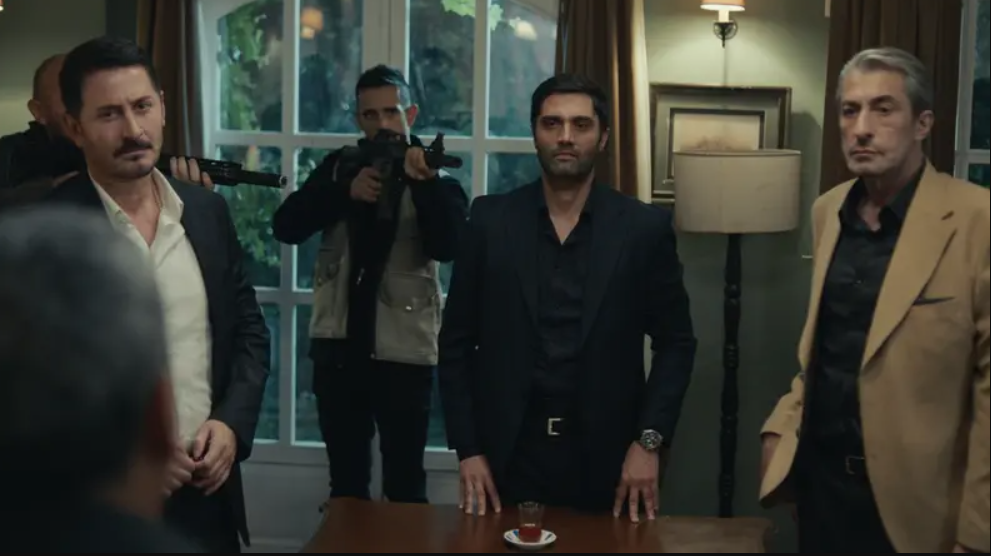
Simultaneously, Korkut, Ejder, and Hamdi pivot toward a more pragmatic mission: securing leverage in a critical port tender. This business subplot, while seemingly detached from the main narrative, hints at deeper political maneuvers—reminding viewers that power, in Teşkilat, is often disguised as commerce.
Love and Espionage: The Altay–Hilal Wedding
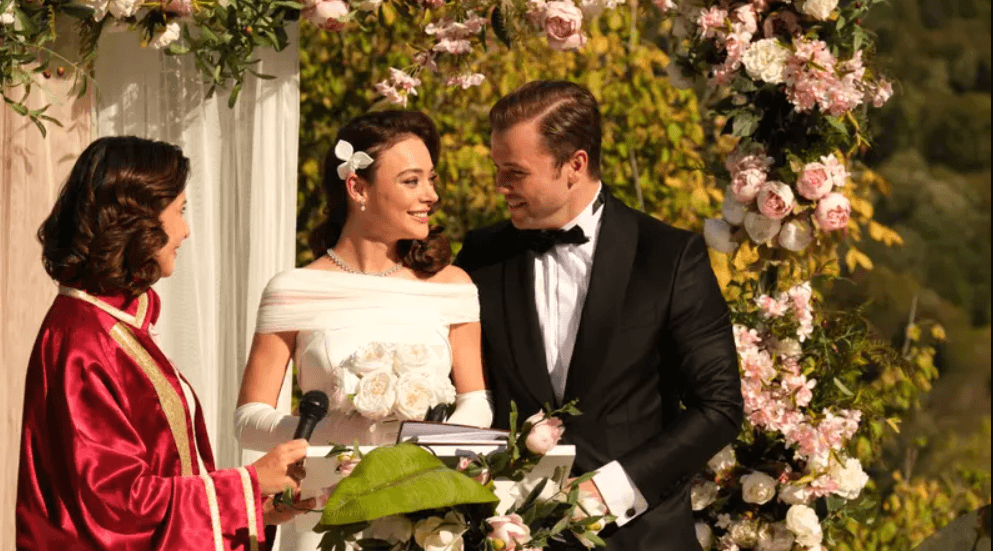
The most visually captivating and emotionally charged segment of Episode 153 is undoubtedly the wedding between Altay and Hilal. What could have been a straightforward romantic milestone is instead rendered with layers of symbolic and narrative complexity.
The Erginsoy family home, meticulously decorated for the ceremony, becomes a microcosm of Teşkilat itself—a place where beauty and danger coexist. Beneath the glittering surface of celebration, secrets whisper through the corridors. Every smile feels like camouflage, every toast like a coded message.
For viewers, this duality is exhilarating. On one hand, the union of Altay and Hilal fulfills a long-awaited romantic arc. On the other, it’s clear that this event is no ordinary celebration—it’s an operation. Both sides of the conflict see the wedding as an opportunity: the Teşkilat team to gather intelligence, and Rutkay to strike a symbolic and personal blow.
This delicate interplay between love and espionage echoes the show’s recurring theme: in the world of intelligence, no moment is entirely private, and no relationship is free from the weight of duty.
Cinematic Excellence: Visual Language and Direction
From a technical standpoint, Episode 153 is a masterclass in tonal balance. The direction employs a restrained palette of muted colors punctuated by flashes of warmth during emotional beats. The cinematography uses shallow focus and reflective surfaces to mirror the duality of appearances—truth versus deception, love versus loyalty.
The editing rhythm accelerates during action sequences but slows down just enough during intimate dialogues to allow emotional resonance. This balance prevents the narrative from descending into chaos, maintaining clarity even as multiple storylines converge.
The production design deserves particular praise. The wedding sequence, with its understated elegance, feels both authentic and cinematic. It evokes not just the grandeur of a Turkish family celebration but also the looming sense of surveillance—every chandelier could hide a microphone, every window a sniper’s scope.
Performances: Power, Vulnerability, and Chemistry
It’s impossible to discuss Teşkilat without acknowledging the strength of its ensemble cast. Episode 153 showcases their range in full force.
Rabia Soytürk (Hilal) continues to deliver performances layered with restraint and quiet strength. Her portrayal of a woman torn between love and duty is both relatable and riveting. In every glance, there’s a story—a secret she’s dying to protect or reveal.
Tolga Sarıtaş (Altay) grounds the chaos with his signature stoicism. Yet, beneath his controlled exterior, we sense the internal struggle of a man who knows that love in his line of work can be both salvation and liability.
Yunus Emre Yıldırımer (Korkut) deserves special mention for his delicate handling of Bahar’s storyline. His performance brings emotional gravity to a subplot that could have easily felt secondary.
Together, the cast creates a dynamic emotional ecosystem—each character orbiting the others in a dance of trust, betrayal, and necessity.
(Source: IMDB)
Themes and Symbolism: The Cost of Duty
At its core, Teşkilat has always been about more than just espionage. It’s a reflection on the moral and emotional complexities of national service. Episode 153 deepens this exploration, portraying loyalty not as a virtue but as a burden.
The contrast between Altay and Rutkay is emblematic: one fights to preserve order through sacrifice, the other seeks power through chaos. Both are prisoners of conviction. And in this dichotomy, the show invites viewers to question the boundaries of righteousness in a world where every action is a calculated risk.
The wedding becomes a metaphor for that paradox—a sacred union shadowed by strategy. Even moments of joy in Teşkilat are fragile, poised on the edge of collapse.
Cultural Resonance: Why Teşkilat Captivates a Global Audience
One of the reasons Teşkilat continues to thrive internationally is its ability to blend Eastern storytelling sensibilities with Western cinematic aesthetics. The series understands that global audiences crave not just spectacle, but emotional authenticity.
The mix of intelligence drama, family dynamics, and ethical dilemmas appeals to viewers far beyond Turkey’s borders. For fans of shows like Homeland or Bodyguard, Teşkilat offers a uniquely Turkish perspective—rooted in national identity yet universally resonant.
Episode 153 exemplifies this cultural fusion: it’s thrilling, romantic, morally complex, and visually sophisticated. It’s also deeply human, reminding us that even in the shadow world of espionage, love remains both the greatest strength and the ultimate vulnerability.
Final Verdict: A Dazzling Chapter in Turkish Spy Television
Teşkilat Episode 153 stands as one of the series’ most balanced and emotionally intelligent episodes to date. It manages to advance multiple storylines while maintaining coherence, suspense, and heart.
With Rutkay’s attack looming, Bahar’s fragile psyche explored, and Altay and Hilal’s wedding serving as a crucible for both personal and political stakes, the episode succeeds in delivering what fans crave most—drama with purpose.
It’s not just a show about spies; it’s a meditation on love, loss, and loyalty under fire. And with each episode, Teşkilat proves that Turkish television can compete at the highest international standards—cinematically, narratively, and emotionally.
(Source: TRT1)
Rating: (4.5/5)
Highlights: Cinematic direction, layered performances, emotional storytelling.
Downsides: Occasional pacing lulls in mid-segments.
Best Moment: The silent exchange between Altay and Hilal before the ceremony—a masterclass in understated emotion.
About Author
Rashida Yasmeen
An international media analyst specializing in Turkish and global television trends. With expertise in drama storytelling, audience engagement, and cross-cultural media, she provides in-depth analysis and fresh perspectives on the evolving entertainment landscape for readers worldwide.