
Ben Onun Annesiyim Episode 1 Review — When Love Becomes a Reckoning
A Story of Loss and Rebirth
Turkish television has long excelled at transforming private pain into grand emotional storytelling, and Ben Onun Annesiyim carries that legacy forward with striking intimacy.
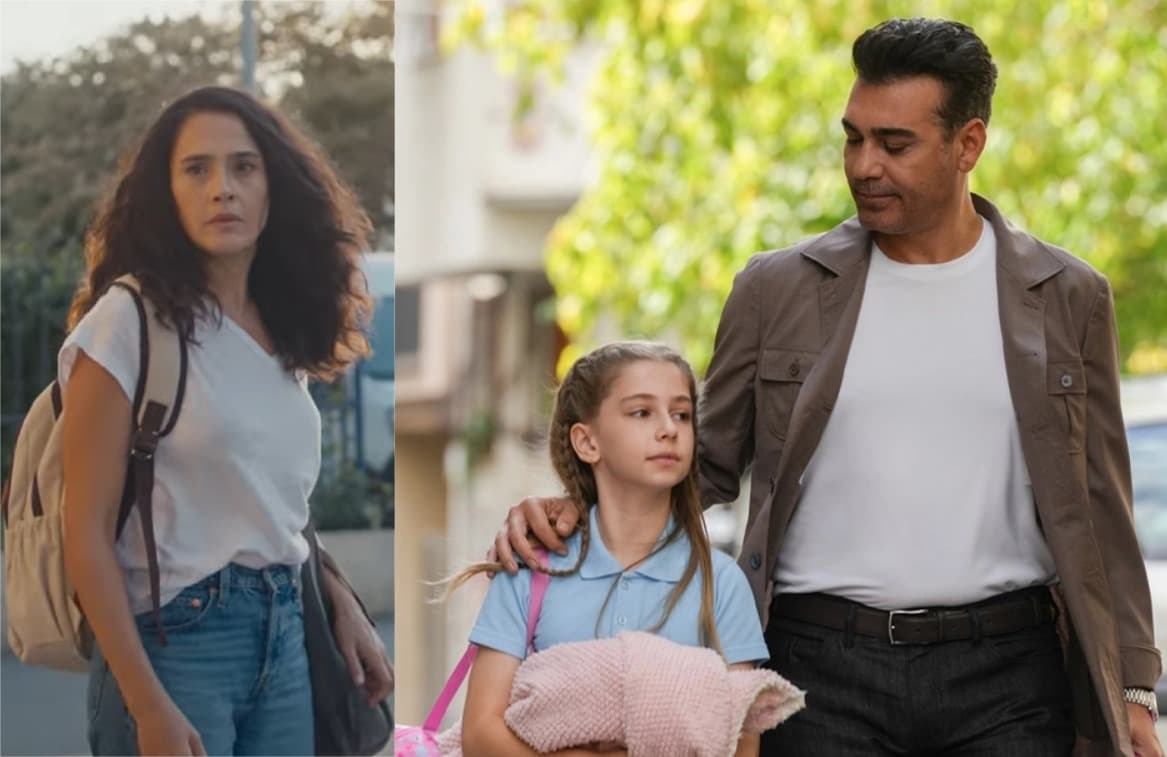
The series begins in silence. Ayşe (Funda Eryiğit) steps out of a prison gate, her face hardened not by bitterness but by survival. Ten years earlier, she was accused of killing her husband. Pregnant and alone, she gave birth in captivity, forced to hand her newborn daughter, Zeynep, to her mother-in-law, İlter.
From the very first frame, director Yunus Ozan Korkut establishes a world defined by restraint and grief. Every scene moves with the patience of real life — a rarity in mainstream drama.
Ayşe’s Return to a World That Moved On
Freedom, for Ayşe, is not liberation. It’s alienation.
Her old neighborhood treats her like a ghost. The world has changed without her. Her only constant is the image of her daughter — a little girl she has never truly met. When Ayşe discovers that Zeynep was adopted by a man named Kemal (Caner Cindoruk), her purpose becomes singular: to be near her daughter at any cost.
Through carefully layered scenes, the episode reveals the emotional duality of motherhood — tenderness laced with obsession.
Ayşe doesn’t reenter Zeynep’s life as a mother. Instead, she becomes her caretaker, concealing her identity behind quiet smiles and long, searching glances. This decision — both courageous and ethically fraught — defines the moral terrain of the entire series.

GENRE: DRAMA
PRODUCER: FATİH AKSOY
DIRECTOR: YUNUS OZAN KORKUT
SCREENWRITER: ÖZGE ARAS
The Power of Funda Eryiğit’s Performance
Few Turkish actors can convey unspoken pain as effectively as Funda Eryiğit. Her Ayşe is not a saint, nor a villain, but a woman shaped by injustice. Eryiğit’s performance is grounded, real, and at times almost unbearably intimate.
She brings emotional precision to scenes that lesser productions might overplay. A trembling breath as she watches Zeynep sleep; a momentary flinch when Kemal mentions the girl’s “real mother.” These quiet gestures say more than any monologue could.
It’s a performance worthy of comparison to Demet Evgar in Alev Alev or Beren Saat in Fatmagül’ün Suçu Ne?, reaffirming Eryiğit’s place among the most expressive talents in Turkish drama.
The Men Between Guilt and Redemption
Caner Cindoruk, as Kemal, delivers a layered portrayal of a man caught between affection and uncertainty. His chemistry with Eryiğit is understated yet charged — a delicate balance of empathy and suspicion.
Kemal is unaware of Ayşe’s true identity, but something in her eyes unsettles him. The writers, led by Özge Aras, masterfully use this tension to explore masculine guilt: the silent, systemic indifference of men to the emotional realities women endure.
Kemal’s arc hints at redemption, but also complicity. His kindness is genuine, yet it exists within a structure that once condemned Ayşe without evidence — a subtle critique of patriarchal justice in modern Turkey.
The Antagonist: İlter’s Cruel Devotion
Every great drama needs a moral counterweight. In Ben Onun Annesiyim, that presence is İlter (Zerrin Tekindor) — Ayşe’s former mother-in-law and the show’s tragic villain.
İlter’s hatred stems from loss. She blames Ayşe for her son’s death and has spent years cultivating vengeance under the guise of family duty. Yet her cruelty is never theatrical; it’s rooted in grief. Tekindor brings gravitas and humanity to a role that could easily have slipped into stereotype.
Through İlter, the series interrogates the darker side of maternal instinct — how love, when twisted by grief, becomes destructive.
Themes of Justice, Gender, and Forgiveness
Ben Onun Annesiyim thrives on its emotional authenticity. Beneath its domestic conflict lies a broader social critique — the silence imposed on women who challenge male-dominated narratives of guilt.
Ayşe’s imprisonment is more than a plot device; it symbolizes how society punishes women who refuse submission. Her fight to reclaim her daughter becomes a metaphor for reclaiming identity and truth in a world that erased her voice.
This blend of intimate and political storytelling places Ben Onun Annesiyim among the most thematically rich Turkish dramas of the decade.
Visual Storytelling and Direction
Director Yunus Ozan Korkut, known for Taşacak Bu Deniz and İçimizdeki Ateş, brings his signature minimalist style. He favors long takes, natural lighting, and still compositions that mirror the emotional isolation of his characters.
Cinematographer Serkan Güler uses muted colors and soft focus to evoke Ayşe’s blurred sense of time. The cityscapes — cold, modern, indifferent — contrast sharply with the warmth of domestic interiors where secrets fester.
Unlike conventional melodramas, the camera never begs for sympathy. It simply observes, letting the audience form judgment through silence and subtext.
Writing and Structure: Özge Aras’s Narrative Precision
Screenwriter Özge Aras, celebrated for her psychological depth in Kırmızı Oda and Yalı Çapkını, constructs the episode with remarkable restraint.
Dialogue is sparse but sharp. Instead of exposition, Aras relies on small, human details — the way Ayşe folds Zeynep’s clothes, the uneaten breakfast left on İlter’s table, the echo of a door closing on forgiveness.
Her script transforms everyday gestures into emotional triggers. The result is storytelling that feels lived, not written.
The Emotional Climax: Love as Betrayal
The episode’s emotional high point comes near its end, during a simple scene at Zeynep’s piano recital. As the little girl performs, Ayşe watches from the crowd, tears brimming.
When Kemal places his hand on Ayşe’s shoulder — unaware he’s comforting the child’s true mother — the moment becomes unbearable in its quiet tragedy.
It’s a scene that encapsulates the series’ central paradox: love that redeems and destroys in equal measure.
Cinematic and Cultural Resonance
In both its subject and execution, Ben Onun Annesiyim aligns with the international prestige wave of Turkish television. It stands beside series like Masumlar Apartmanı and Bir Başkadır in its exploration of female psychology through moral ambiguity.
Outbound reference: Variety Global’s 2025 feature on “The Rise of Prestige Turkish Dramas” highlights Medyapım’s role in bringing introspective storytelling to mainstream audiences — Ben Onun Annesiyim fits seamlessly into that evolution.
Technical Credits and Production Detail
| Category | Information |
| Title | Ben Onun Annesiyim |
| Episode | 1 (Premiere) |
| Director | Yunus Ozan Korkut |
| Writers | Özge Aras |
| Production Company | MEDYAPIM |
| Network | Now TV |
| Main Cast | Funda Eryiğit (Ayşe), Caner Cindoruk (Kemal), Zerrin Tekindor (İlter), Günay Karacaoğlu, Serhat Özcan, Zeynep Özder, Gürsu Gür, Azra Aksu, Sema Öztürk |
| Genre | Psychological Family Drama / Mystery |
| Premiere Date | October 24, 2025 |
| Time Slot | Fridays 20:00 TRT |
Critical Evaluation
As a premiere, Ben Onun Annesiyim succeeds on every narrative and technical front. Its measured pacing, sharp performances, and emotional realism mark it as one of 2025’s standout debuts.
Unlike conventional revenge dramas, it refuses sensationalism. Instead, it chooses empathy and introspection, showing that the most profound conflicts occur within the soul.
With Funda Eryiğit’s commanding lead and Özge Aras’s meticulous writing, the series positions itself as a benchmark for quality Turkish storytelling — one that values silence over spectacle, and truth over melodrama.
Final Thoughts
Ben Onun Annesiyim is not just a television drama; it’s a meditation on motherhood, justice, and identity. It asks: what does it mean to love someone you cannot claim?
Through its intimate lens and moral honesty, it reminds audiences why Turkish dramas continue to resonate worldwide — they speak to universal emotions with unflinching sincerity.
If Episode 1 is any indication, this series will not merely entertain; it will unsettle, provoke, and, ultimately, heal.
By Yasmeen | October 25, 2025
About Author
Rashida Yasmeen
An international media analyst specializing in Turkish and global television trends. With expertise in drama storytelling, audience engagement, and cross-cultural media, she provides in-depth analysis and fresh perspectives on the evolving entertainment landscape for readers worldwide.