
Teşkilat Episode 161: Power, Pressure, and the Cost of Intelligence
Teşkilat has consistently distinguished itself within Turkish television by treating intelligence storytelling with seriousness, emotional depth, and geopolitical awareness. Episode 161 stands out not because of spectacle alone, but because it carefully constructs tension through time constraints, psychological manipulation, and moral conflict.
This episode marks a turning point where the narrative slows just enough to let the consequences of past decisions surface. Rather than rushing toward resolution, the story deliberately tightens its grip on the audience. From an analytical perspective, Episode 161 demonstrates how Teşkilat has matured into a series that values strategy and character psychology as much as action.
As someone who closely follows Turkish drama trends and intelligence-based narratives, this episode reflects a confident production that understands both its audience and its thematic responsibility.
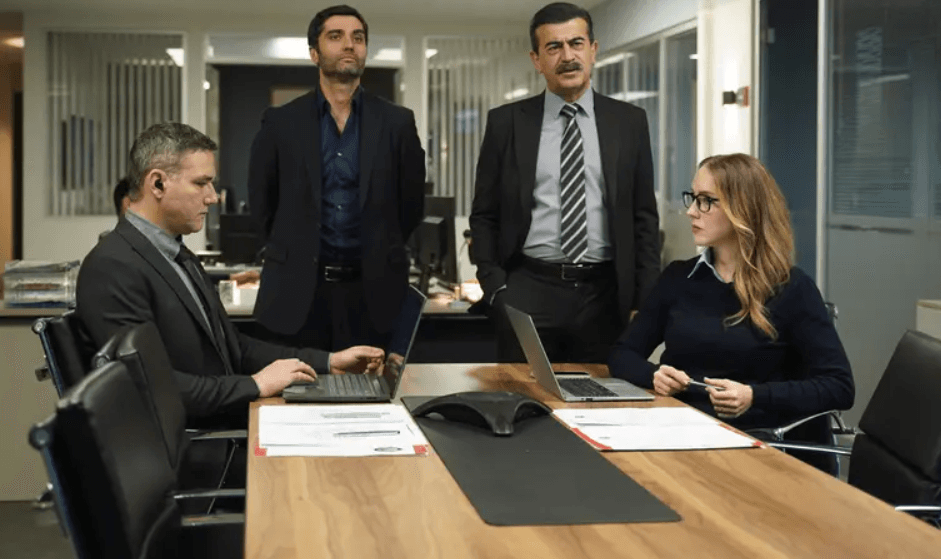
Altay and Hilal are left stunned when the agent they believe they have captured suddenly appears alongside Rutkay. As they try to determine what information the agent has leaked, he threatens Altay and gives him just one hour to bring the capsule.
While Korkut struggles with growing concern for Bahar, he also works to uncover Rutkay’s true intentions and dismantle his carefully constructed schemes. Meanwhile, Cevher once again focuses on protecting his daughter from Hayat, refusing to let her be drawn further into danger.
Thanks to Altay’s determination, the Teşkilat team comes closer than ever to locating the capsule. However, enemy forces move quickly to trap Altay and seize it first. Just as Altay believes he has finally secured the capsule, he finds himself facing a far greater and more dangerous threat than anticipated.
The One-Hour Ultimatum: Time as a Weapon
The most powerful narrative device in Episode 161 is the one-hour deadline imposed on Altay. This is not merely a plot mechanic designed to increase pace. It reflects a reality often portrayed in modern intelligence dramas, where operatives are denied the luxury of reflection and forced into decisions with incomplete information.
Rutkay’s agent does not rely on physical force. Instead, he weaponizes time, uncertainty, and fear. The psychological pressure placed on Altay underscores one of Teşkilat’s strongest themes: intelligence warfare is fought as much in the mind as it is in the field.
This approach elevates the episode beyond conventional action storytelling and places it firmly within the realm of strategic drama.
Rutkay’s Strategy: A Villain Defined by Control
Rutkay continues to be one of the most compelling antagonists in recent Turkish television. Episode 161 reinforces that his power does not come from chaos, but from control. He understands his enemies, anticipates their reactions, and designs situations where every outcome benefits him.
What makes Rutkay particularly effective is his patience. He allows others to believe they are one step ahead, only to reveal that they are still operating within his framework. In this episode, the appearance of the supposedly captured agent serves as a reminder that Rutkay’s network is deeper and more resilient than assumed.
From a narrative analysis standpoint, Rutkay represents the modern intelligence threat: invisible, adaptive, and emotionally detached.
Altay’s Burden: Leadership Under Pressure
Altay’s arc in Episode 161 is defined by isolation. Despite being surrounded by a team, the responsibility ultimately rests on him. The deadline, the capsule, and the threat all converge on a single decision-maker.
The episode does an effective job of portraying leadership not as authority, but as burden. Altay is not only racing against time; he is also carrying the weight of potential consequences for the entire operation. His choices reflect a balance between instinct and discipline, a recurring theme throughout the series.
This portrayal strengthens the audience’s connection to the character and reinforces why Altay remains central to Teşkilat’s emotional core.
Korkut and Bahar: Emotional Stakes in a Strategic World
Parallel to the main intelligence conflict, Korkut’s concern for Bahar adds a deeply human layer to the episode. While the larger narrative revolves around power and information, this subplot reminds viewers that intelligence work inevitably impacts personal lives.
Korkut’s struggle is subtle but significant. He is torn between operational focus and emotional responsibility. Rather than distracting from the main plot, this tension enhances it, reinforcing the idea that no mission exists in isolation from human consequence.
Cevher, Hayat, and the Cost of Protection
Cevher’s determination to protect his daughter from Hayat reflects another recurring theme in Teşkilat: protection often comes at a cost. His actions are driven by fear, experience, and a desire to prevent history from repeating itself.
This subplot contributes to the episode’s emotional density and grounds the larger intelligence narrative in familial reality. It also reinforces the series’ broader message that intelligence conflicts rarely remain confined to the shadows.
The Capsule: More Than an Object
The capsule remains the central symbol of Episode 161. Rather than treating it as a simple piece of classified material, the narrative frames it as a representation of power, leverage, and moral responsibility.
Every character’s relationship to the capsule reveals something about their values. For Rutkay, it is a tool of dominance. For Altay, it is a responsibility that must be contained. For the enemy forces, it is an opportunity to shift balance.
This layered symbolism is one of the reasons the episode resonates beyond its immediate plot.
Direction, Pacing, and Technical Execution
From a production standpoint, Episode 161 is tightly constructed. The pacing avoids unnecessary acceleration, allowing tension to build organically. Strategic pauses, restrained music, and controlled camera movement all contribute to an atmosphere of unease.
The episode trusts its audience to remain engaged without constant action, a sign of confident storytelling and experienced direction.
Global Context: Why Teşkilat Continues to Matter
Teşkilat’s growing international recognition is not accidental. The series addresses universal themes such as loyalty, ethical compromise, and the emotional toll of national service. Episode 161 exemplifies these strengths by blending local cultural context with globally relevant storytelling.
According to international media analyses, Turkish dramas with strong political and emotional narratives continue to gain global traction due to their authenticity and depth. Teşkilat fits squarely within this trend.
Final Assessment
Teşkilat Episode 161 succeeds because it understands restraint. Rather than relying on constant action, it builds suspense through timing, character decisions, and psychological conflict. The episode reinforces the series’ reputation as one of the most thoughtful intelligence dramas currently on Turkish television.
For viewers seeking depth, realism, and emotionally grounded storytelling, Episode 161 delivers with confidence.
Source: TRT1, IMDB, Teskilat officials, Dizitrack
About Author
Rashida Yasmeen
An international media analyst specializing in Turkish and global television trends. With expertise in drama storytelling, audience engagement, and cross-cultural media, she provides in-depth analysis and fresh perspectives on the evolving entertainment landscape for readers worldwide.