
Mehmed: Sultan of Conquests Episode 54 — Power, Betrayal, and a Secret Crusade
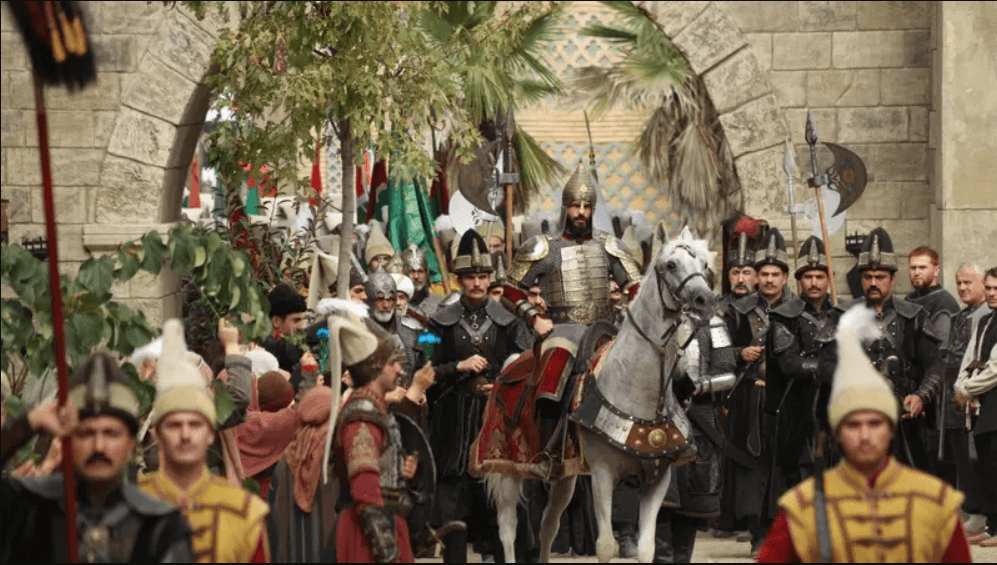
Mehmed: Sultan of Conquests Episode 54 Preview
1. The Palace Rebalances — When Power and Loyalty Collide
The episode opens with a profound tension inside the Ottoman palace. The corridors of Topkapı echo with whispers as political tides shift once more. Grand Vizier Mahmud Pasha, cunning and pragmatic, seeks to tilt the scales of power back in his favor. His first move: reinstating Zağanos Pasha to the imperial council — a strategic gamble that reshapes the Divan and reignites old rivalries.
Meanwhile, Şehabeddin Pasha feels the tightening grip of political pressure. Once a pillar of stability, he now finds himself cornered, as Mehmed’s two trusted mentors — Mahmud and Zağanos — stand once again on opposing sides. Their unbreakable bond, forged through years of loyalty and battle, faces its severest test yet.
But beneath the political maneuvering lies a darker undercurrent: a buried secret from a past military campaign that threatens to surface. This hidden truth could unravel the reputations of both statesmen and alter Mehmed’s faith in his oldest allies.
“The empire was not built on strength alone,” Mahmud Pasha remarks, “but on the shadows cast by every conquest.”
2. The Heart’s Rebellion — Şehzade Bayezid’s Political Marriage
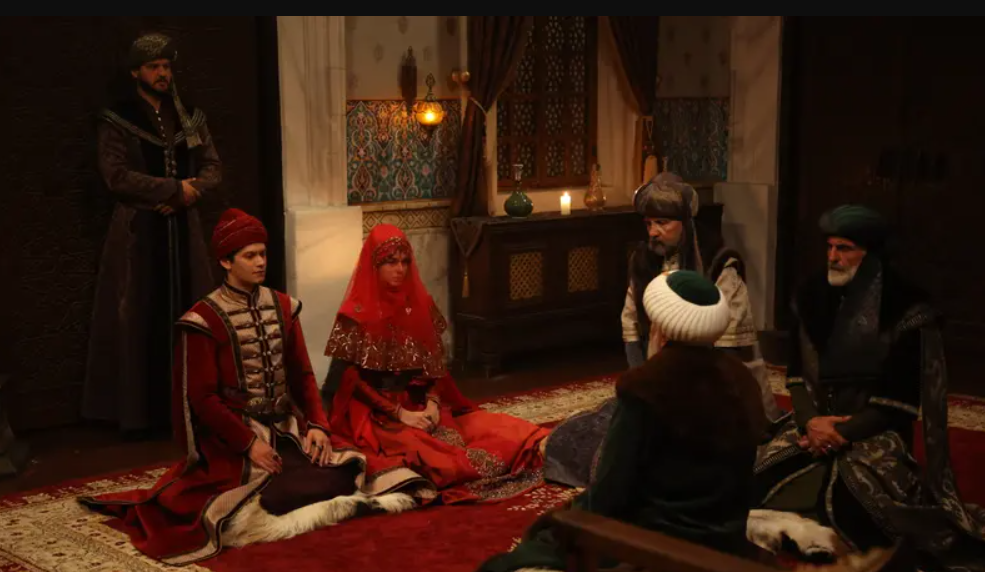
Far from the battlefield, another kind of war is unfolding — one of the heart. Prince Bayezid, Mehmed’s son, is commanded by the Sultan to marry Gülperi Hatun in a union meant to secure political stability. The marriage is not born of love, but of necessity — an alliance between the Ottoman court and the Karamanoğulları Beylik, an often-hostile Anatolian principality.
Yet Bayezid’s soul belongs elsewhere. The shadow of Julia, the woman who captured his heart, looms over every moment of his arranged marriage. The royal wedding becomes less a celebration and more a reckoning — a collision between personal desire and imperial duty.
Gülperi, however, is far from a passive pawn. Her elegance masks a shrewd mind and a dangerous secret. Through hidden letters sent to her father, Karamanoğlu İbrahim Bey, she unveils a plot that could destabilize Mehmed’s court from within. Her loyalty remains uncertain, and every word she writes is a seed of treachery sown in the soil of the empire.
3. Shadows Over Pontus — The Race for the Sacred Relics
Beyond the palace walls, a parallel storyline unfolds in Pontus, where faith and ambition intertwine in a deadly race. Vlad — fierce and enigmatic — and the Karatuğ warriors pursue the trail of sacred relics said to hold unimaginable power. These relics, far from mere symbols of faith, are believed to possess the potential to alter the fate of entire civilizations.
The pursuit becomes perilous when Komnenos, a Byzantine remnant noble, strikes a clandestine alliance with Papaz John, a shadowy cleric devoted to restoring Christian dominance. Their secret pact transforms the relic hunt into a crusade — not of faith, but of vengeance.
Vlad’s own past resurfaces amid this chaos. His dark history and divided soul blur the lines between savior and destroyer. Blood spills in ancient monasteries, and whispers of the relics’ power draw both the righteous and the damned into a spiraling conflict.
“These relics,” says Papaz John, “are not of God or man. They are the keys to empire.”
4. The Sultan’s Dilemma — Between Faith, War, and Fate
As intelligence from Pontus reaches the capital, Mehmed faces a monumental decision. The Sultan had already decreed a military campaign against the Karamanids, determined to suppress rebellion and unify Anatolia. But the news from Pontus changes everything.
The sacred relics, if lost to Europe, could ignite a new Crusade — uniting kingdoms and faiths against the Ottoman Empire. This threat forces Mehmed to reconsider his priorities and redefine his strategy.
In the council chamber, he listens to conflicting voices: Mahmud Pasha urges immediate military response; Zağanos advises caution and secrecy. Mehmed, silent yet calculating, weighs the fate of nations in his mind.
Ultimately, he postpones the campaign, then — in a moment of solitary reflection — reverses his decision. His eyes set toward a horizon known only to him.
He dons his armor once more, his voice cold yet resolute:
“The target is known… but the path remains hidden.”
It’s a line that captures both the mystery and majesty of his reign — a ruler guided not by chance, but by destiny concealed in silence.
5. Thematic Depth — Power, Faith, and the Duality of Conquest
Episode 54 delves deeper than political intrigue; it explores the philosophy of rulership. Mehmed, as portrayed in this series, embodies the eternal tension between heart and empire, faith and reason, destiny and free will.
Every character — from the ambitious Mahmud to the conflicted Bayezid — becomes a reflection of Mehmed’s own inner duality. The Sultan’s brilliance is matched only by his loneliness; his empire’s expansion comes at the cost of emotional exile.
This episode also highlights the recurring motif of “hidden wars” — battles fought not on open fields, but in chambers, letters, and hearts. The relics of Pontus symbolize the eternal struggle for divine legitimacy: who truly owns God’s will, the sword or the soul?
6. Cinematic Craft — Direction, Visuals, and Performances
Visually, Episode 54 is a masterpiece of atmosphere. Bülent İşbilen’s direction emphasizes contrasts: the grandeur of the palace versus the darkness of Pontus; the stillness of strategy against the chaos of faith-driven war.
The color palette leans heavily on gold and shadow — representing the duality of glory and corruption. Sweeping camera movements, slow-motion battle sequences, and close-up emotional beats create a balance between spectacle and intimacy.
Performances are uniformly strong. Serkan Çayoğlu (Mehmed) delivers one of his most nuanced portrayals — a ruler torn between logic and legacy. Fikret Kuşkan (Mahmud Pasha) brings gravitas, while Tansel Öngel (Zağanos) imbues his role with restrained passion.
Meanwhile, Leyla Tanlar’s Gülperi Hatun steals scenes with quiet menace, and Gökhan Gencebay’s Vlad provides a haunting villain — a man both monstrous and tragic.
7. Historical and Symbolic Context
Episode 54 doesn’t just entertain; it educates subtly. It revisits historical tensions between the Ottoman Empire, the Karamanids, and the Christian principalities of Anatolia and the Black Sea.
The “sacred relics” storyline mirrors medieval Europe’s obsession with divine objects as instruments of legitimacy — from the Holy Lance to the True Cross — and how such myths were used to justify wars.
By blending these threads with Ottoman political realism, the series achieves a rare feat: transforming history into living drama, grounded yet mythic.
8. The Sultan’s Next Move — A Kingdom on the Edge
The episode concludes with Mehmed preparing for an undisclosed campaign. His silence terrifies his enemies and unsettles his allies. Viewers are left with unanswered questions:
What is the true target of this secret mission?
Are the relics real, or merely bait in a grander game?
And can Mehmed hold together a court divided by ambition and deceit?
The final frame — Mehmed riding into dawn, clad in armor — captures the spirit of empire in motion. The Sultan rides not toward battle alone, but toward destiny itself.
9. Audience Reaction and Future Expectations
Social media reaction following Episode 54 was electric. Fans praised the show’s emotional weight, its cinematography, and the growing complexity of Mehmed’s character arc. Many noted how the political and spiritual storylines now intertwine, signaling the series’ transition into its most ambitious phase yet.
Critics highlighted the writing’s maturity — focusing less on spectacle and more on ideology, loyalty, and the price of power.
With the introduction of new alliances and the looming possibility of a pan-European crusade, Episode 55 promises revelations that could redefine the empire’s future — and Mehmed’s own soul.
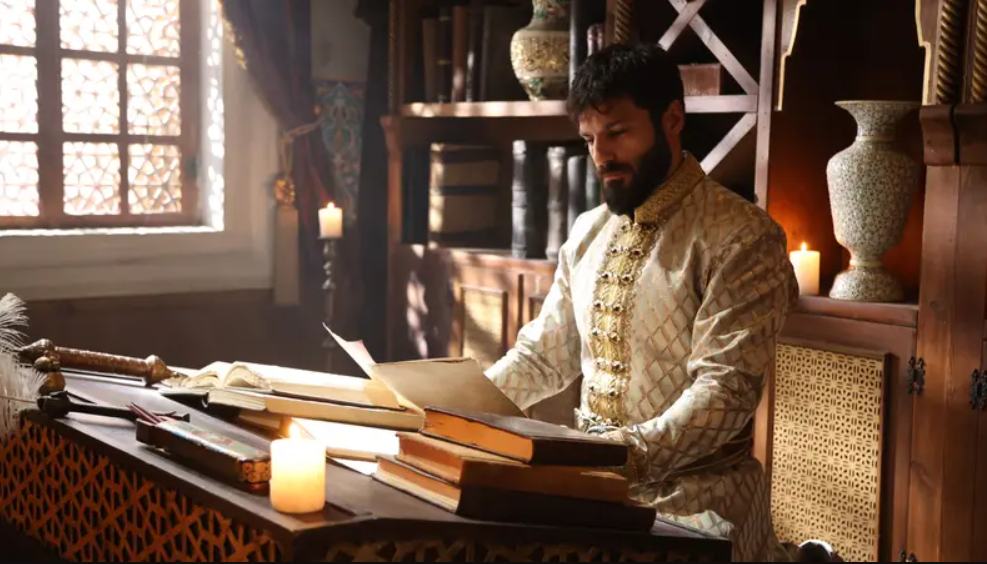
Final Thought: The Emperor and His Shadows
Episode 54 of Mehmed: Sultan of Conquests stands as one of the series’ most sophisticated installments — an episode where every glance, letter, and command carries the weight of history.
It’s not just about battles won or lost; it’s about the silent wars within every ruler’s heart. Mehmed’s decision to march once more, his motives hidden from all, cements his legend as the Sultan who conquered both lands and fate itself.
With politics tightening, faiths colliding, and a secret crusade brewing beyond the horizon, Mehmed: Fetihler Sultanı continues to prove why it reigns supreme among historical dramas — a saga where empire, faith, and destiny collide in eternal struggle.
Image Gallery


About Author
Rashida Yasmeen
An international media analyst specializing in Turkish and global television trends. With expertise in drama storytelling, audience engagement, and cross-cultural media, she provides in-depth analysis and fresh perspectives on the evolving entertainment landscape for readers worldwide.