
Kuruluş Orhan Episode 1 Review – The Legacy of Osman Bey and the Rise of a New Empire
Introduction: A Son’s Destiny and a Father’s Dream
“Cümle müslimin, cümle gayrimüslimin, yetmiş iki milletin devleti olacağız.”
(“We shall be a state for all Muslims and non-Muslims, for seventy-two nations.”)
These words, spoken early in Kuruluş Orhan’s premiere, encapsulate both the magnitude and the moral core of this new series. As Kuruluş Osman handed the baton to a new generation, Kuruluş Orhan arrives not merely as a sequel but as a statement — an expansion of legacy and vision.
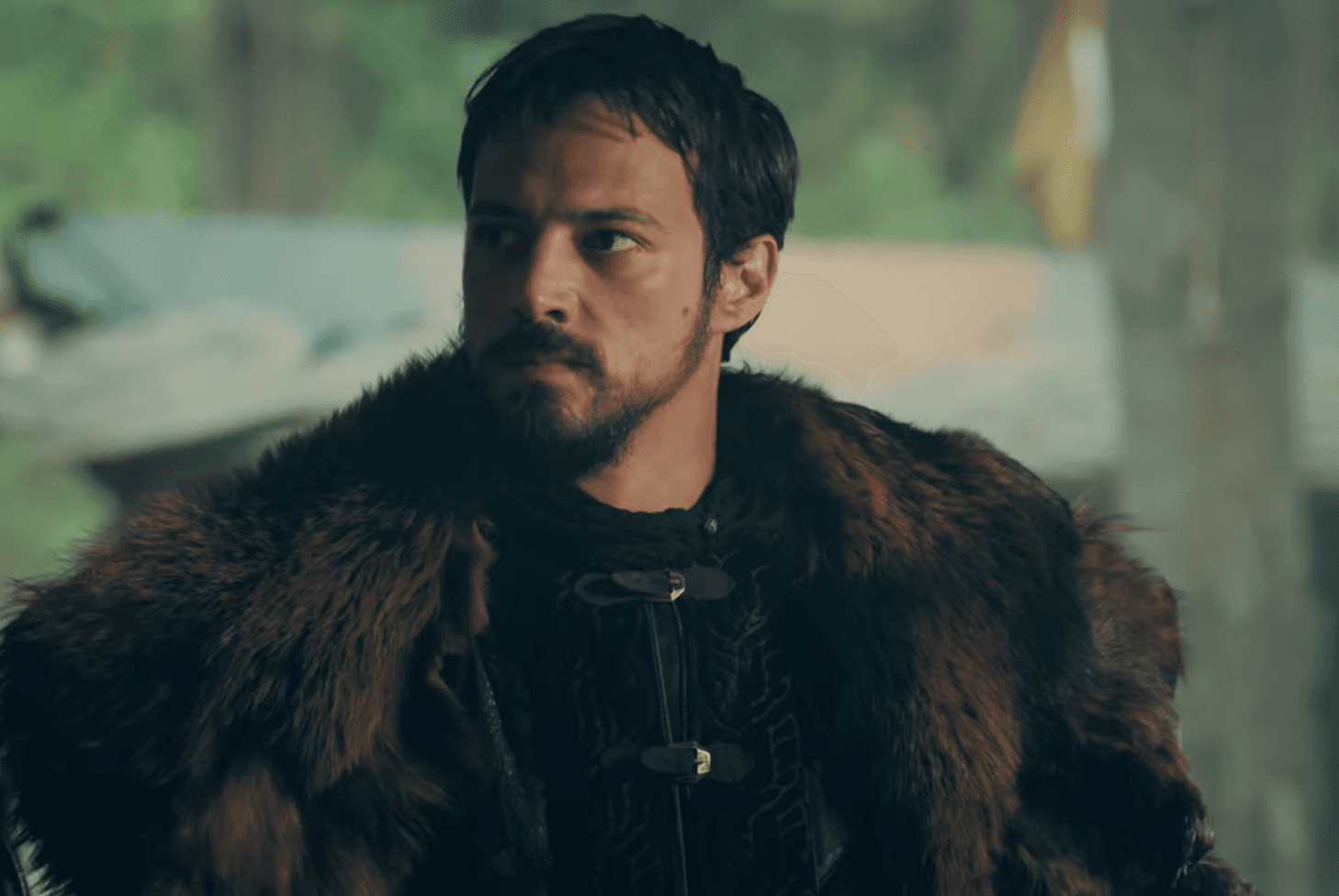
Set nine years into Orhan Bey’s siege of Bursa, the first episode draws the audience into a war-torn world where ideals meet blood, and dreams demand sacrifice. The camera lingers on the scars of battle and the weight in Orhan’s eyes — the look of a man who must fulfill his father’s unfinished dream.
Bursa Before the Conquest: History Meets Cinematic Precision
The series opens with sweeping aerial shots of Bursa, a fortress city that gleams under Byzantine rule. The production design deserves applause: from the stone textures of the city walls to the mist rolling across the hills, the visuals blend historical authenticity with cinematic artistry.
Bursa’s defenders, led by the formidable Tekfur Saroz and his iron-willed commander Flavius, embody the immovable resistance that has defined this long siege. Orhan Bey’s forces, meanwhile, are worn but unbroken — a mirror to the Ottoman spirit that built an empire from resolve rather than numbers.
Osman Bey’s Council: The Toy of Destiny
In a powerful narrative parallel, the series revisits the institution of the Toy (Council) — a political and spiritual cornerstone of Turkic governance.
Osman Bey, portrayed with his characteristic gravitas, summons his beys to decide Bursa’s fate. The Toy scenes are a masterclass in dramatic tension — men of faith and ambition debating the destiny of nations under flickering torchlight.
Here, Orhan Bey faces his first political crucible. The beys, weary of prolonged war, demand a new commander. The ambitious Şahinşah Bey steps forward, his words honeyed but dangerous. Osman’s silence is deafening — will the founder of a state disown his own son?
This moment becomes the emotional pivot of the episode. It’s not just a debate of strategy — it’s a meditation on legacy, merit, and power.
Love and Loyalty: Nilüfer Hatun’s Quiet Strength
Where the battlefield shakes with steel, the heart of Kuruluş Orhan beats quietly through Nilüfer Hatun. Her portrayal is a blend of tenderness and resolve — the emotional anchor to Orhan’s storm.
Between candlelit prayers and tearful embraces, Nilüfer embodies the soul of the early Ottoman household — a woman who carries both the cradle and the crescent. When the Toy’s decision threatens to break Orhan’s spirit, she becomes his unseen armor, whispering faith when doubt grows loud.
Her scenes resonate deeply with modern viewers — the timeless portrait of women who hold the fabric of nations together from the shadows.
Alaeddin Bey: The Voice of Reason or Rivalry?
The subplot involving Alaeddin Bey introduces one of the episode’s most compelling political dynamics. Rational, strategic, and unshaken, Alaeddin represents intellect over instinct — a foil to Orhan’s warrior nature.
When he boldly steps forward and offers to take over Orhan’s command if Osman deems fit, the narrative gains an unexpected moral complexity. This is not jealousy it’s duty. Alaeddin is as much a son of Osman as Orhan is, and his loyalty lies with the empire’s survival, not bloodline politics.
This duality of brothers mirrors historical accounts where the early Ottoman state often balanced intellect and valor to forge its path.
Malhun Hatun and the Heir’s Burden
The matriarchal tension deepens with Malhun Hatun, a character whose strength rivals that of the battlefield. Her growing discontent with Gonca Hatun Alaeddin’s wife marks the start of a familial subplot that cleverly weaves domestic politics into the empire’s grander vision.
When Malhun entrusts Didar Hatun to find a new bride for Alaeddin, it’s not merely about lineage — it’s about legacy. The future of the Osmanoğlu line becomes a political instrument.
This storyline highlights one of Kuruluş Orhan’s strengths: its ability to humanize historical figures without diminishing their greatness.
Blood and Oaths: The Death of Flavius’s Brother
As the Toy awaits its verdict, Orhan acts decisively and ruthlessly. In a brilliant tactical sequence, he executes a covert strike, killing Flavius’s brother, a symbolic and strategic victory meant to choke Bursa’s defense.
But every conquest births vengeance.
Flavius’s reaction raw, human, and terrifying sets the tone for the episodes ahead. His oath for revenge transforms him from a mere antagonist into a personal storm that will haunt Orhan’s destiny.
Themes and Symbolism: Faith, Nationhood, and Human Fallibility
Thematically, Episode 1 is a meditation on faith and fallibility. The line “Cümle müslimin, cümle gayrimüslimin…” becomes more than rhetoric — it’s a vision of pluralism that predates modern statehood.
Director Mehmet Bozdağ carefully positions Kuruluş Orhan as both a historical drama and a mirror to contemporary identity — a reminder that the Ottoman vision of unity was born not from conquest, but conviction.
Cinematography captures this philosophy warm light on faces during prayer scenes contrasts with the cold steel of battlefields, signifying the duality of empire: sword and scripture.
Production and Performances
The craftsmanship in Kuruluş Orhan is unmistakable. The costuming — a visual marriage of Turkic motifs and early Ottoman aesthetics — stands out for authenticity.
Burak Özçivit’s spiritual passing of the torch to the next generation (off-screen and narratively) is subtle yet powerful. Emre Bey, portraying Orhan, balances rage with restraint his command presence is maturing, but not yet complete. That incompleteness makes him compelling.
Supporting performances, especially Özge Törer as Bala Hatun and Miray Akay as Nilüfer, ground the grandeur in emotion. The music, echoing Kuruluş Osman’s signature motifs, swells at key moral junctures — never manipulative, always purposeful.
Cultural Relevance and Global Appeal
Kuruluş Orhan doesn’t just serve Turkish audiences; it continues the globalization of Turkish historical dramas that began with Diriliş Ertuğrul.
Streaming platforms such as Netflix and ATV have widened the reach of these stories to Latin America, South Asia, and Europe — regions where viewers are fascinated by the blend of history, faith, and heroism.
By invoking universal themes duty, love, faith, and ambition Kuruluş Orhan positions itself as more than a historical series. It becomes a reflection on leadership in turbulent times.
Final Thoughts: A New Crescent Rises
Episode 1 of Kuruluş Orhan is both an ending and a beginning a poetic bridge between eras. It challenges its hero not just to conquer lands, but to inherit ideals.
Where Kuruluş Osman was about foundation, Kuruluş Orhan is about expansion — not just territorial, but moral and emotional.
If the next episodes continue at this caliber balancing political tension, heartfelt character arcs, and visual elegance — Kuruluş Orhan may well redefine the next chapter in Turkish historical television.
Source: ATV, britannica.com, Variety Global Magzine, Dizitrack
About Author
Rashida Yasmeen
An international media analyst specializing in Turkish and global television trends. With expertise in drama storytelling, audience engagement, and cross-cultural media, she provides in-depth analysis and fresh perspectives on the evolving entertainment landscape for readers worldwide.