
Hearts Tested, Paths Chosen: “Children of Heaven” Episode 6 Explores Redemption, Love, and the Power of Second Chances

Cennetin Çocuklar: Redemption and Hope in the Heart of Turkish Drama
Introduction: Turkish Dramas and the Language of Emotion
For international audiences, Turkish television dramas—known as diziler—have become more than just entertainment; they are cultural exports that speak a universal emotional language. With sweeping cinematography, slow-burning romances, and moral complexity, Turkish series have gained passionate followings across continents.
Among these, Cennetin Çocukları (Children of Heaven) stands out as a contemporary story deeply rooted in the country’s storytelling tradition—where family, faith, and fate intertwine. Episode 6, in particular, captures the essence of Turkish melodrama: the struggle for redemption, the weight of unspoken love, and the eternal hope for renewal.
This chapter unfolds as a turning point for several of its characters, pushing them toward difficult choices and moral reckonings. İskender’s quest to make amends, Ayla’s painful realization, and Bayram’s family’s quiet transformation form an emotional tapestry that reflects both personal and societal battles.
(Source: TRT1)
İskender’s Journey Toward Redemption
At the center of Episode 6 stands İskender—a man burdened by regret and haunted by his own missteps. In previous episodes, his choices disappointed Cennet, the woman whose love represented purity and forgiveness. Having lost her trust, İskender now faces an internal reckoning.
For the first time, he resolves to earn money through helal (lawful and honest) means—a significant concept in Turkish and Islamic moral codes. This choice symbolizes more than financial integrity; it represents spiritual purification.
His immediate motivation, however, is urgent and deeply human: he must secure funds to help Ayşecik, a little girl in need of surgery. As İskender races to gather what is needed, his journey becomes a metaphorical pilgrimage—a chance to redeem himself through compassion and self-sacrifice.
There’s a quiet poignancy in his scenes. Every obstacle he encounters reflects his inner battle between the man he was and the man he’s trying to become. The direction subtly reinforces this tension—lingering close-ups, dim lighting, and sparse dialogue emphasize his isolation. Yet, beneath that solitude lies hope: the belief that redemption is always possible, even for the most broken souls.
In Turkish storytelling, redemption arcs often carry spiritual undertones. A man seeking helal kazanç (lawful earnings) isn’t merely working for survival; he’s cleansing his conscience. İskender’s transformation mirrors the timeless Anatolian belief that true strength lies in humility and moral rebirth.
Ayla’s Discovery: Love, Jealousy, and the Price of Truth
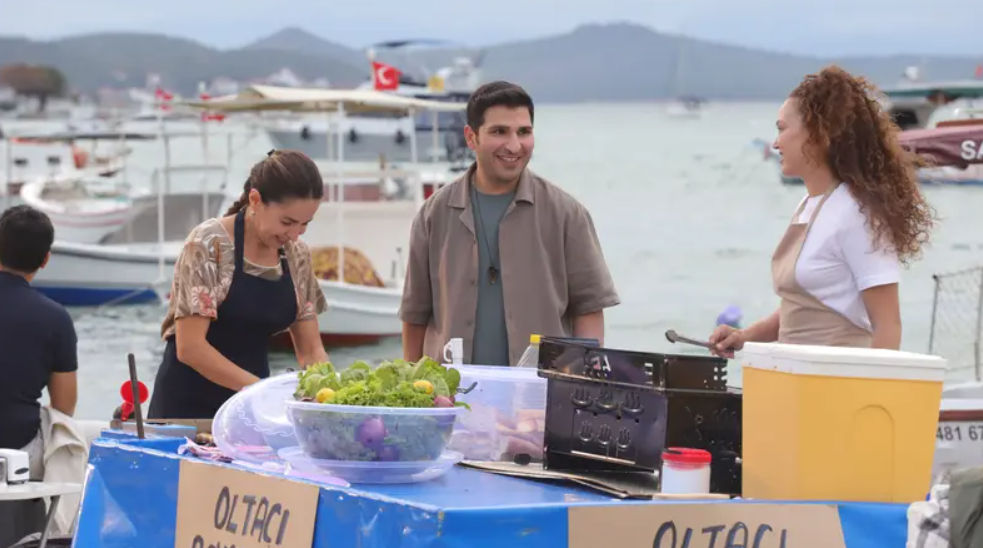
While İskender walks a path of repentance, Ayla stands on the edge of emotional collapse. Episode 6 reveals her growing suspicion of the closeness between İskender and Gönül, another woman in his orbit. Her instincts prove correct—there is a connection, but one layered in complexity rather than betrayal.
Ayla’s discovery becomes a turning point not just for her relationships, but for her own sense of identity. She has long been the emotional anchor of her family, the nurturer who gives without asking. Yet, when faced with the possibility of deceit, she confronts a new version of herself—one who must learn to balance forgiveness with self-respect.
The Turkish drama tradition excels at depicting women like Ayla: strong yet wounded, graceful yet resolute. Her turmoil embodies a quiet feminist statement often found in modern Turkish television—the acknowledgment that love without equality leads to pain, and that self-worth must come before devotion.
Visually, her scenes are some of the most striking in the episode. The cinematography lingers on her silence—the heavy pauses between words, the long stares through half-open doors. These moments evoke the emotional grammar of Turkish storytelling, where what’s left unsaid often speaks the loudest.
As Ayla’s emotions shift from confusion to heartbreak and finally to defiance, the viewer feels the full arc of her awakening. Her confrontation with İskender isn’t explosive but restrained, reflecting the maturity of a woman who has endured too much to fall apart now.
Adem and Sezen: Love Amid the Ruins
In contrast to İskender’s turmoil and Ayla’s heartbreak, the relationship between Adem and Sezen introduces a thread of gentle hope. For Adem, this episode marks a turning point—he finally finds a reason to stay, and that reason is Sezen.
Their bond grows quietly, without melodrama, symbolizing a different kind of love: one rooted in understanding rather than passion. In a world where everything feels uncertain, they offer each other a fragile sense of stability.

For international viewers, Adem and Sezen’s story provides emotional balance. Turkish dramas often rely on this duality—intense conflict on one side, tender connection on the other. It reflects a philosophical truth embedded in Turkish culture: that life is both hardship (dert) and joy (sevinç), and both are necessary for growth.
As they navigate their uncertain future, Adem and Sezen’s chemistry captures the universal yearning for companionship in times of chaos. Their story may be secondary in screen time, but thematically, it’s vital—it shows that love, when stripped of illusion, can become a quiet act of resilience.
Bayram’s Family and the Dawn of Renewal
The subplot involving Bayram and his family delivers the episode’s most heartwarming message: that healing is possible, even after great loss. Guided by Ayla’s influence, the family begins to rebuild their lives. Her kindness and determination breathe new energy into their home, reminding viewers of the Turkish ideal of aile bağı—the sacred bond of family.
Ayla’s role here shifts from passive sufferer to active healer. Her touch brings hope not only to Bayram’s household but also to herself. Through helping others, she rediscovers her own strength.
Bayram’s family represents the moral backbone of Children of Heaven. Their scenes are filled with symbolic gestures—sharing bread, offering tea, praying together—that highlight the importance of community and shared humanity. These simple acts resonate deeply with both Turkish and global audiences, reminding us that compassion remains the foundation of every meaningful change.
Their “new beginning” doesn’t promise perfection, but it does promise progress. And in the world of Cennetin Çocukları, that’s enough to keep the light alive.
Cultural Context: Why “Children of Heaven” Resonates Beyond Borders
For viewers unfamiliar with Turkish dramas, Cennetin Çocukları offers a window into a culture where storytelling is both art and moral reflection. Turkish series often weave Islamic values, poetic dialogue, and emotional realism into modern narratives.
Episode 6 exemplifies this blend perfectly. Themes of redemption, helal living, and family unity reflect cultural values that transcend language. At the same time, universal emotions—love, regret, forgiveness—make it accessible to anyone who’s ever struggled to do right after doing wrong.
The series also reflects a growing trend in Turkish television: socially grounded storytelling that avoids pure melodrama. While earlier diziler leaned heavily on romance and revenge, Cennetin Çocukları builds its tension from moral dilemmas and human flaws. Its world feels real—imperfect, but hopeful.
This cultural authenticity explains why Turkish dramas have exploded in popularity across Latin America, the Middle East, and Europe. Their emotional honesty and aesthetic beauty bridge cultural divides, proving that the language of empathy is truly global.
Cinematography, Performance, and Direction
Episode 6 stands out for its meticulous direction and visual storytelling. The camera often lingers on faces rather than action, allowing emotion to unfold organically. Lighting plays a crucial role—the warm hues in Bayram’s home contrast with the cold, muted tones of İskender’s solitary journey, visually reinforcing the divide between despair and hope.
Performances remain exceptional. The actor portraying İskender delivers a masterclass in restrained intensity, balancing guilt and determination with quiet power. Ayla’s portrayal is equally compelling; her pain feels lived-in, her silence thunderous.
The supporting cast adds authenticity to every interaction. From Sezen’s tender gaze to Bayram’s quiet resilience, every detail feels intentional. This attention to realism is part of what makes Turkish dramas feel cinematic rather than episodic—they treat every moment as part of a larger emotional symphony.
Themes and Symbolism
Episode 6 weaves together several recurring themes central to Turkish moral storytelling:
- Redemption through good deeds: İskender’s attempt to earn honest money and save Ayşecik reflects the belief that one redeems the soul through action, not intention.
- The sanctity of family: Bayram’s household symbolizes the enduring strength of family ties, echoing the proverb, “A family’s warmth is stronger than winter’s cold.”
- Forgiveness as freedom: Ayla’s decision to face her pain rather than run from it shows that forgiveness begins within.
- Love as resilience: Adem and Sezen’s understated romance stands as proof that love is not always dramatic—it’s sometimes the quiet decision to stay.
Each of these themes is universal, but their expression is distinctly Turkish—rooted in faith, empathy, and poetic understatement.
Why Episode 6 Matters
In the broader arc of Children of Heaven, Episode 6 functions as both a climax and a reset. Characters confront their pasts and redefine their futures. The narrative slows down, allowing viewers to feel the weight of transformation.
For international audiences, this episode encapsulates why Turkish dramas have captivated millions: they offer stories of people trying to be better—not heroes or villains, but ordinary souls stumbling toward grace.
It’s not about the grand twist or the shocking reveal. It’s about quiet courage—the kind that doesn’t make headlines but changes lives.
Final Thought: The Beauty of Starting Over
By the end of Episode 6, Children of Heaven reaffirms its central message: no matter how broken the past, there’s always room for renewal. İskender’s redemption, Ayla’s awakening, and Bayram’s family’s rebirth intertwine like threads in a shared destiny.
For all its emotional heaviness, the episode leaves viewers with a sense of hope—a belief that faith and love can rebuild even the most shattered hearts. It’s the kind of storytelling that reminds us why Turkish dramas continue to enchant audiences worldwide: they don’t just tell stories; they heal through them.
About Author
Rashida Yasmeen
An international media analyst specializing in Turkish and global television trends. With expertise in drama storytelling, audience engagement, and cross-cultural media, she provides in-depth analysis and fresh perspectives on the evolving entertainment landscape for readers worldwide.