
Aşk ve Gözyaşı Ends Its Run: What the Early Finale of Hande Erçel and Barış Arduç’s Drama Says About the Changing Face of Turkish Television
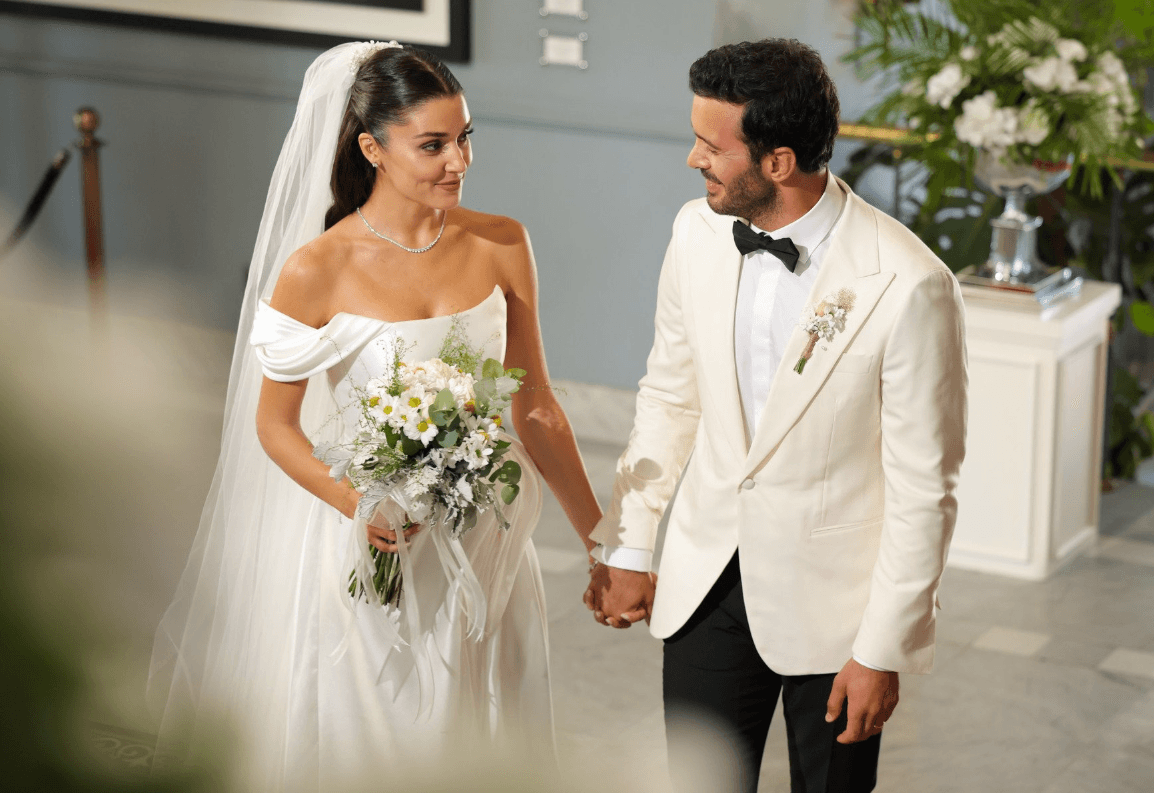
hen Aşk ve Gözyaşı premiered on September 19, 2024, expectations soared. Adapted from Queen of Tears—one of South Korea’s most successful and emotionally charged dramas—the Turkish remake promised a sweeping story of love, power, and loss, helmed by two of Turkey’s most charismatic stars: Hande Erçel and Barış Arduç.
However, just weeks after its debut, Turkish entertainment journalist Birsen Altuntaş confirmed what many in the industry had feared: Aşk ve Gözyaşı will end with its 7th episode, airing on November 7, 2025. Despite the pedigree of its creators and the powerhouse performances of its leads, the show failed to capture audiences, averaging a 2.52 rating across its first six episodes.
From High Hopes to Sudden Closure
Produced by O3 Medya and directed by Engin Erden, Aşk ve Gözyaşı was envisioned as a prestige project. Its screenplay, penned by Dilara Pamuk, reimagined the Korean hit for Turkish sensibilities — infusing family drama with cultural nuance, emotional restraint, and Istanbul’s corporate backdrop.
But in today’s cutthroat television landscape, ratings remain king. The premiere drew 3.33, already below network expectations for a prime-time romantic drama. By the second episode, viewership had dropped below 3.0. Following a one-week hiatus and a script rewrite, the series hit a new low at 1.54, effectively sealing its fate.
“No matter how strong your cast is, the audience must feel the story. And sometimes, a great story in one culture doesn’t fully translate to another,” says a senior TV critic from Hürriyet Daily News.
A Tale of Adaptation Fatigue
The Turkish television industry has long found inspiration in international formats—from Latin American telenovelas to Korean dramas. But as recent years show, not every adaptation resonates.
While Queen of Tears became a cultural phenomenon in Korea—mixing humor, tragedy, and social critique—Aşk ve Gözyaşı struggled to find its emotional rhythm. Turkish audiences, already spoiled by long-running, emotionally heavy series like Yalı Çapkını and Kızılcık Şerbeti, found the narrative pacing uneven and the adaptation too derivative.
Critics also point to creative inconsistency, noting that mid-season script changes disrupted story flow. The chemistry between Erçel and Arduç, though praised individually, couldn’t compensate for uneven plotting.
The Business Behind the Decision
In the Turkish TV economy, ratings are more than numbers—they’re survival.
Each rating point can translate to millions in advertising revenue or loss. Streaming platforms like Netflix Türkiye, BluTV, and Gain have shifted audience habits toward on-demand content, pressuring traditional broadcasters to maintain strong live ratings.
For O3 Medya, a studio known for global exports like Medcezir and İstanbullu Gelin, the early cancellation is not merely creative disappointment but a business recalibration.
Industry sources suggest the company may pivot toward digital-first mini-series and co-productions with Middle Eastern and European partners. As Turkish series become key exports, producers are prioritizing projects that appeal not just locally but globally.
“The Turkish drama market is evolving. Shorter series with cinematic quality and emotional truth are the new norm,” says media analyst Selin Aydemir from Global TV Insights.
Hande Erçel and Barış Arduç: Talent Beyond Ratings
Despite the show’s short lifespan, Aşk ve Gözyaşı offered moments of emotional brilliance—thanks largely to its leads.
- Hande Erçel, coming off international success from Sen Çal Kapımı (You Knock on My Door), continues to be one of Turkey’s most marketable stars, with a fanbase spanning Latin America, the Middle East, and Europe. Her portrayal of a woman caught between love and loyalty was praised for emotional restraint and nuance.
- Barış Arduç, best known for Kiralık Aşk and Alparslan: Büyük Selçuklu, brought gravitas and subtle intensity to his role. Even critics who found the show uneven noted his performance as “the emotional anchor in an unstable script.”
Both actors remain in high demand, with new projects rumored for 2026—Erçel in a Netflix limited series, and Arduç in a historical thriller from TRT1.
Audience Behavior and the Era of Selective Viewing
The downfall of Aşk ve Gözyaşı also reflects a broader trend: viewer fatigue.
As Turkish dramas grow longer—often exceeding 140 minutes per episode—audiences increasingly turn to streaming, YouTube highlights, or international dramas with tighter storytelling.
Digital conversation around Aşk ve Gözyaşı was strong initially, trending on Twitter (X) and Instagram after the first episode. Yet engagement plummeted by the fourth week. Social media data analysis by entertainment site Ranini.tv shows that hashtag usage (#AşkVeGözyaşı, #HandeErçel, #BarışArduç) dropped 65% between episodes three and six.
What This Means for the Industry
The cancellation of Aşk ve Gözyaşı is a wake-up call for Turkish broadcasters.
The industry’s reliance on adaptations must evolve toward original, culturally grounded storytelling. Viewers crave authenticity and emotional coherence more than star power.
Moreover, as global platforms invest in Turkish content, quality control and creative freedom become more vital than formulaic remakes. For global audiences who discovered Turkish dramas via Netflix, Disney+, and MBC, the bar has never been higher.
Conclusion: Endings, Lessons, and New Beginnings
Aşk ve Gözyaşı might not have achieved commercial success, but it contributes to an ongoing conversation about what makes modern Turkish television thrive—or fail.
For audiences, it’s a reminder that great casting alone cannot rescue a weak narrative.
For producers, it’s a call to balance local emotion with global relevance.
And for stars like Hande Erçel and Barış Arduç, it’s another chapter in their evolving careers—proof that even in failure, there’s growth.
As the show bows out with its final episode on November 7, Turkish drama enters a new era: one where storytelling must adapt as swiftly as the audiences it seeks to captivate.
Source: Atv, Birsen Altuntaş, O3 Medya Official, Global TV Insights, Dizitrack, Hürriyet Daily News
About Author
Rashida Yasmeen
An international media analyst specializing in Turkish and global television trends. With expertise in drama storytelling, audience engagement, and cross-cultural media, she provides in-depth analysis and fresh perspectives on the evolving entertainment landscape for readers worldwide.